Article

21 Jul 2026

Market Pulse: CIO Insights | June 2026

Market Insights

Australian equities closed the 2026 financial year with a subdued June, the S&P/ASX 200 returning 0.7% for the month and 6.1% for the twelve months to 30 June 2026.

Beneath that headline sat a sharp defensive rotation, as investors moved out of Resources and Energy following a tentative Iran-United States Memorandum of Understanding and eased geopolitical risk premia, and into Health Care, Consumer Staples, Consumer Discretionary and select Industrials that had been under pressure earlier in the year.

The 2026 financial year was defined, more than most, by dispersion.

·       Materials returned 52.2% and Energy 13.3%, driven by strength in gold, copper and lithium prices.

·       At the other extreme, Health Care fell 36.2% and Information Technology fell 33.4%. Health Care was dominated by CSL, where competitive pressure in its Behring plasma business, an immunoglobulin inventory overhang, softer China demand for albumin, further write-downs of Vifor, and an abrupt CEO departure combined to derate the stock from above 35x P/E to closer to 12x.

·       In Technology, the perceived threat of AI disruption weighed on software-based businesses such as Xero, Wisetech, Technology One and Life360, and by extension on Communications names including REA, Car Group and Seek.

Commodity markets set the tone.

Gold peaked near US$5,400 an ounce in January 2026 and eased to around US$4,000 by June end, still a 21% financial-year gain, as US rate expectations pivoted from cuts to hikes under new Federal Reserve Chair Kevin Warsh and higher inflation from a surging oil price. Copper rose more than 35% to US$13,375 a tonne, supported by data-centre, electric-vehicle and grid-infrastructure demand.

Lithium remained volatile: prices were supported through much of the year by the temporary closure of CATL’s Jianxiawo mine, before selling off in June on the announced restart. Oil fell 18.1% in June alone as the Iran-United States peace framework raised expectations that the Strait of Hormuz would revert to normal shipping traffic.

Domestically, the Reserve Bank held the cash rate at 4.35% following three consecutive hikes, retaining a hawkish bias while flagging data dependence. Governor Michele Bullock reiterated that the Bank stands ready to tighten further if required to return inflation to the target band.

The Fair Work Commission delivered an award wage increase of roughly 5%, and the ongoing impact of the Federal Budget tax changes has begun to show in the housing market, with dwelling prices declining 0.4% in June and ending three years of consecutive gains.

Unemployment improved to 4.4%, though the broader 2026 trend still points modestly higher.

Small caps lagged the broader market. The S&P/ASX Small Ordinaries fell 2.0% in June, reversing two months of outperformance, with Small Resources down 13.4% amid the commodity retracement. Small Industrials, by contrast, gained 3.9% on the same easing in geopolitical risk, with retailers, builders and technology names leading.

Globally, the S&P 500 declined 1.1% as the AI-led momentum trade paused after several months of strong gains.

In our view, the June rotation is a useful reminder that leadership in this market has been narrow and, at times, momentum-driven.

The dispersion between the best and worst-performing sectors over the year, more than 88 percentage points from Materials to Health Care, is unusual by any historical standard and reinforces the case for disciplined, bottom-up stock selection over passive exposure.

To read the full version, or listen to a summary, please click the links below:

Article

22 Jun 2026

Market Pulse: CIO Insights | May 2026

Market Insights

Australian equity markets advanced modestly in May, with the S&P/ASX 200 Accumulation Index returning 1.1% for the month.

The recovery that began in April continued, although the domestic market lagged a broadly stronger global backdrop. The US S&P 500 rose around 5%, led heavily by the technology sector and artificial intelligence (AI) semiconductors, as offshore investors continued to reward the data-centre and compute build-out. In my view, the defining feature of the month was the narrowness of leadership: gains were concentrated in a small number of sectors rather than broadly distributed across the market.

The dominant domestic event was the Federal Budget for 2026-2027, which the Government delivered in May.

I regard it as the most significant change to the tax system since the introduction of the GST. The headline measures affecting individuals are material: investors will now pay their full marginal tax rate on all real capital gains, subject to a minimum applied rate of 30%; from 1 July 2027 negative gearing on residential property will be limited to new builds; and from 1 July 2028 discretionary trusts will attract a 30% minimum tax paid by the trustee.

The Government framed these reforms around housing affordability and inequality, coupled with a $2bn Local Infrastructure Fund and build-to-rent measures, alongside a $14.5bn package to strengthen fuel and fertiliser reserves. In my opinion the second-round effects of these changes have not been fully assessed, and they introduce a layer of uncertainty into the consumer, banking, and property outlook that the market is still digesting.

On monetary policy, the RBA raised the cash rate by a further 25 basis points to 4.35%, continuing to lean against inflation that remains above target.

The market has been pricing a further move to 4.60% later in the year, though I expect the Board to pause and assess the combined impact of the Budget and prior tightening before acting again (which they have done in June).

The inflation picture is genuinely mixed.

April headline CPI eased to 4.2%, the lowest reading of the current cycle, while core inflation ticked up to 3.4% from 3.3%, a reminder that the last leg of disinflation is likely to be the most difficult. Q1 GDP slowed sharply to 0.3% quarter-on-quarter, household consumption is softening, and unemployment rose to 4.5%, the first meaningful increase in some time.

Sector dispersion was wide. Materials was the standout, rising more than 10% as base metals rallied, with copper extending its structural advance on AI data-centre and energy-transition demand. Consumer Discretionary also gained, supported by softer data and the prospect that the rate-hiking cycle is nearing its end.

At the other extreme, Health Care was again the weakest sector, falling close to 9%, driven by a further earnings downgrade from CSL and an ongoing struggle with both the valuation and growth outlook for the sector.

Energy was weaker as oil softened on hopes of a Middle East resolution, alongside the defensive Consumer Staples and Utilities sectors.

Small Caps and Mid Caps both edged ahead of Large Caps, with the S&P/ASX Small Ordinaries Accumulation Index rising 2.03%.

We have written in past letters that we expect Quality to reassert itself as markets place greater value on strong balance sheets, predictable earnings, and durable cash flow, particularly in uncertain conditions.

May continued that trend, with the highest-quality names within our long books performing well. We do not draw firm conclusions from a single month, but the dispersion now evident across sectors and factors is precisely the environment in which I believe: disciplined, bottom-up active management can add value.

To read the full version, or listen to a summary, please click the links below:

Fund Updates

20 May 2026

ausbiz: Housing Warning Signs for Banks and Builders

Michael Skinner from Blackwattle Investment Partners joins ausbiz to discuss growing pressure in Australia’s housing market, as rising interest rates, falling auction clearance rates and unrealistic seller expectations begin to weigh on sentiment. Michael warns the slowdown could extend beyond property, creating broader risks for ASX-listed banks, construction firms, building materials and REITs.

To view please click the link below:

Article

Market Pulse: CIO Insights | April 2026

Market Insights

Australian equity markets bounced back in April, with the S&P/ASX 200 Total Return Index gaining 2.2% following the ceasefire between the US-Israel coalition and Iran.

The de-escalation of conflict in the Strait of Hormuz prompted a meaningful unwind of the risk-off positioning that drove March’s correction, although our local ASX market lagged the strong rallies offshore. The US S&P 500 returned approximately 10.4%, with major European and Asian markets recording gains of 5% to 14% in local currency terms.

In Australia, the macroeconomic picture continued to harden. The RBA recently raised the cash rate by a further 25 basis points, its third consecutive increase this year, taking the cash rate to 4.35%. Australian CPI accelerated to 4.6% year-on-year in March, with fuel prices alone contributing 1.1% to the headline figure. Trimmed mean inflation held at 3.3% annually, in line with the RBA’s February forecasts.

With unemployment near generational lows at 4.3% and wage growth running above population growth, the RBA further hiked rates in May taking the cash rate to 4.60%.

Sector performance reversed sharply from March.

·       Information Technology was the standout, gaining 13.2% as sentiment around data infrastructure and AI-related capital expenditure recovered.

·       Real Estate added 8.6%, with the market looking through implied higher rates to focus on CPI-linked rental income.

·       Materials returned 4.3% on improved base metals pricing.

·       Health Care was the weakest sector, falling 8.7% as earnings expectations were revised lower.

·       Consumer Staples also lagged, declining 4.1%.

Size dispersion was notable, with the Small Ordinaries returning 3.3%, the S&P/ASX 200 Ex-20 returning 2.7%, and the ASX 100 returning 2.2%, a reversal of March’s flight to large cap defensiveness.

Within the ASX 100, Quality was the leading long/short factor at 1.0%, with Growth contributing 0.8%, while Momentum lagged at -3.2%. April may mark the start of the Quality factor recovery we have been anticipating, as markets begin to differentiate between business models and reward genuine earnings durability.

In commodities, base metals rallied sharply. Copper gained 5% and nickel surged 14% as the ceasefire improved the demand outlook. Spodumene prices recovered 13% to US$2,660 per tonne and iron ore was broadly flat at US$108 per tonne. Brent crude fell 3.7% to US$114 per barrel, though futures pricing remains well above pre-conflict levels, embedding an ongoing inflationary tail risk. Gold eased 1%. The Australian dollar strengthened 4.4% against the US dollar to 0.72.

Forward earnings for the ASX 200 were revised modestly lower in aggregate, though the FY27 consensus growth outlook of 12.6% remains supportive.

In our view, the environment continues to reward businesses with genuine earnings resilience, particularly as the second-round effects of higher energy costs and the upcoming Fair Work wage decision present additional headwinds to margin expectations. The dispersion between the strongest and weakest sectors remains historically wide, reinforcing the value of disciplined active management.

To read the full version, or listen to a summary, please click the links below:

Article

17 Apr 2026

Market Pulse: CIO Insights | March 2026

Market Insights

The outbreak of conflict between the US-Israel coalition and Iran dominated financial markets in March, driving the S&P/ASX 200 Total Return Index down 7.1% for the month, its worst monthly result since June 2022.The index is down 1.6% for the first quarter of 2026.

Global markets were similarly pressured, with the US S&P 500 declining approximately 5% over the same period.

The consequent disruption to Strait of Hormuz shipping was the primary transmission mechanism, with oil finishing the month above US$100 per barrel, a gain of roughly 50% in March. This energy shock has materially altered the inflation and monetary policy outlook globally.

In Australia, the RBA responded by raising the cash rate by 25 basis points to 4.10% at its March meeting, its second consecutive increase, though the decision was a narrow 5-to-4 vote.

Notably, all board members agreed a further increase was warranted to address domestic inflation pressures, which were present even before the conflict. Several major banks now expect further hikes, with forecasts for the cycle peak ranging from 4.35% to as high as 4.85% if second-round inflation effects persist.

February headline CPI was 3.7%, and is expected to rise further through mid-year as higher energy costs flow through the economy. Q4 GDP growth of 2.6% confirmed the economy entered this period from a position of strength, but higher rates and energy costs are expected to weigh on consumption and dwelling investment going forward.

Energy was by far the best performing sector in the S&P/ASX 200 for March, rising 20.4%.

Higher oil prices also supported the Utilities sector, up 4.9%, given Origin Energy’s large weight and its exposure to oil price-linked LNG production. Defensives held up relatively well, with Insurance (+4%) and Staples (+2%) outperforming.

Less intuitively, Materials was the weakest sector in the month, partly driven by the decline in the gold price which fell almost 12%.

Possible technical factors were at play, with institutional investors potentially liquidating gold positions to meet margin or capital calls from losses in other asset classes. More fundamentally, higher interest rates and a stronger US dollar tend to be headwinds for the gold price. Outside of gold, higher energy costs, particularly in diesel, are a material cost headwind for miners, compounding concerns over a slowing global economy facing higher inflation and interest rates.

Sectors: Technology (-12.5%) and Property (-11.2%) were also material laggards, driven by the outlook for higher interest rates having a greater impact on valuations in both high growth stocks and bond-like stocks. The Size factor was notable: Small Ordinaries (-11%) and Mid Caps (-10%) both underperformed the Large Cap ASX20 index (-6%) by a significant margin, consistent with typical behaviour during market corrections.

Quality and Momentum were the weakest style factors in March, as the market rotated aggressively into low-beta, high-dividend yield names.

Quality returned -10.8% and Momentum -12.4% in the ASX 100. The spread between the best and worst performing sectors, Energy at +20.4% and Technology at -12.5%, was among the widest in recent years, underscoring the value of active stock selection in a market where index returns mask vastly different outcomes beneath the surface.

To read the full version, or listen to a summary, please click the links below:

Fund Updates

16 Apr 2026

ausbiz: Top Stocks To Take Advantage Of The AI Shift

Michael Skinner from Blackwattle Investment Partners joins ausbiz to discuss how artificial intelligence is reshaping investment management and where its impact is still underdeveloped. He outlines how most firms are currently using AI primarily as a research aid rather than embedding it across core investment processes, and explains Blackwattle’s plan to integrate AI firm-wide across macro analysis, stock selection, portfolio construction, risk management, trading, and client reporting.

Michael also shares his views on the types of businesses best positioned to benefit from AI-driven structural change, as well as areas of the market that may face longer-term headwinds as automation accelerates.

To view please click the link below:

Fund Updates

18 Mar 2026

ausbiz: Standout Stocks Making The Most Noise

Blackwattle Long-Short Deputy Portfolio Manager, Elan Miller joins ausbiz to discuss the standout stocks and February insights.

The ASX delivered a strong rally in February, supported by broadly positive earnings outcomes however volatility has picked up meaningfully, with geopolitics and macro uncertainty driving larger swings across key sectors.

Key insights:

• Increased volatility across large-cap stocks, despite generally resilient underlying fundamentals
• Broad-based earnings beats and analyst upgrades, with banks and miners continuing to underpin market strength
• Technology and healthcare lagging — driven by indiscriminate AI-related selling in tech and cost, currency and tariff pressures in healthcare
• Ongoing opportunities in quality compounders, while higher rates and transport-driven inflation pose risks to consumer discretionary

To view please click the link below:

Fund Updates

26 Feb 2026

Webinar – Equity Income Fund

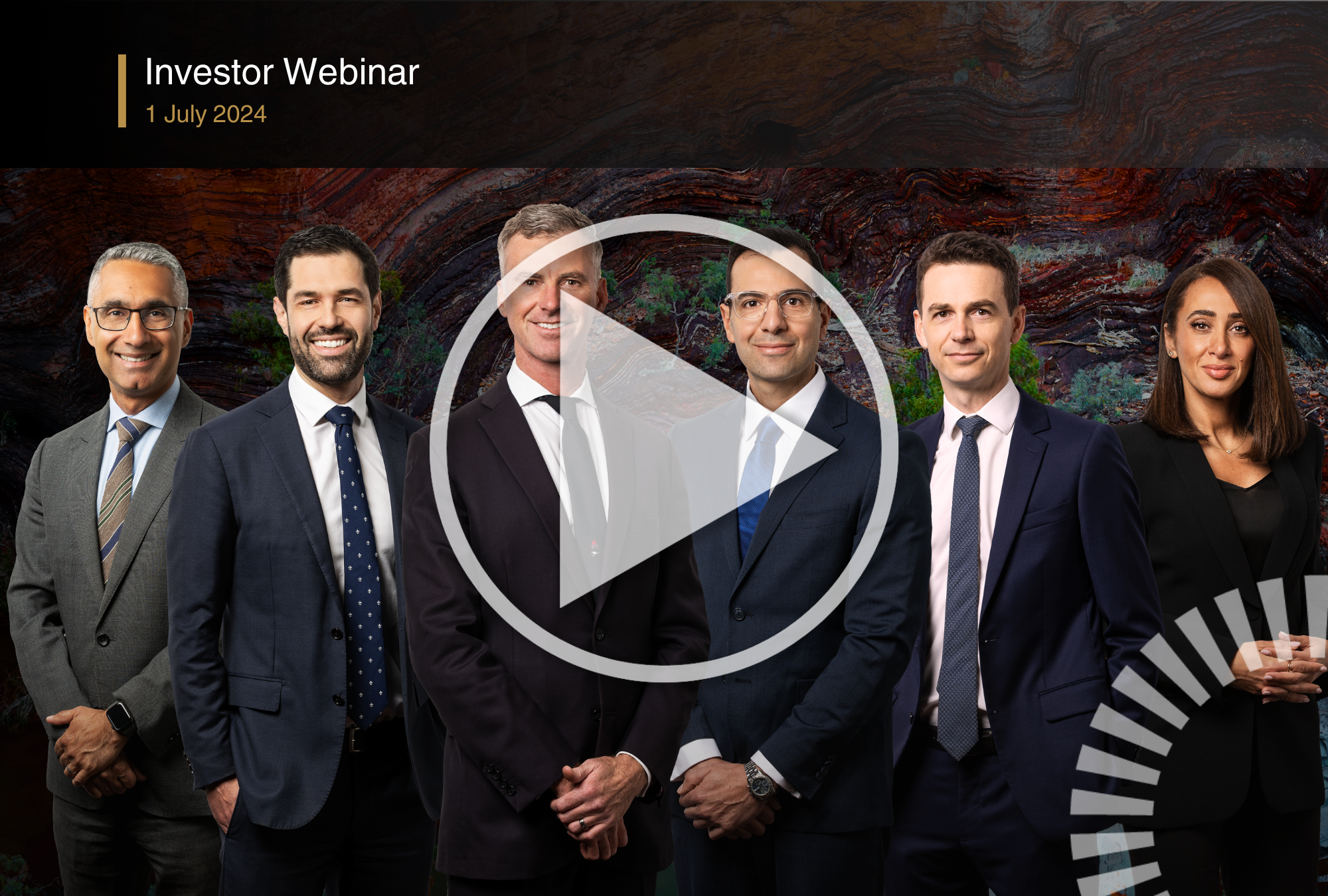
Following the launch of the Blackwattle Equity Income Fund, CEO Jarred Rubin and Portfolio Manager Rudi Minbatiwala provide an in depth overview of the Fund’s investment strategy, objectives, and approach to delivering consistent income outcomes for investors.

Please click the video below to view:

Article

19 Feb 2026

Market Pulse: CIO Insights | January 2026

Market Insights

Australian equity markets began 2026 with continued divergence beneath the surface. The S&P/ASX 200 rose +1.78% in January, supported primarily by a powerful rally in Materials, while growth-oriented sectors and the Quality factor remained under pressure.

The defining feature of the month was commodity strength. Gold rose approximately +13% in USD terms, extending what has now been one of the strongest multi-year advances in decades. Central bank gold purchases, which according to the World Gold Council reached record levels in 2024 and remained elevated through 2025, continue to provide structural support. Copper also firmed, metallurgical coal rallied, uranium strengthened, and spodumene prices surged sharply.

In contrast, Technology stocks declined heavily as global markets grappled with the accelerating pace of AI development. Several new large language model releases in December and January heightened concerns about disruption risk for incumbent software businesses. The result was a rapid compression in valuation multiples globally, particularly across high-duration growth equities.

We highlight caution when assessing any new technology investment given the current pace of distribution and supersession.

From a macro perspective, Australian inflation data for the December quarter surprised modestly to the upside, with headline CPI at 3.8% year-on-year and trimmed mean inflation remaining, in our opinion, sticky. Producer price inflation also remained firm. As a result, expectations for the RBA cash rate target have been repriced materially, and the RBA subsequently raised the cash rate by 25bps in early February to 3.85%.

The divergence between Australia and the United States remains noteworthy. While the Federal Reserve is broadly expected to continue its easing cycle, Australia’s policy stance is more neutral to mildly restrictive. This interest rate differential, combined with strong commodity prices, saw the Australian dollar rally approximately +4.4% in January to around US$0.70.

Globally, equity markets were constructive. Emerging markets outperformed (+8.8%), Japan remained firm, and the S&P 500 advanced modestly. However, beneath headline returns, sector rotation has intensified. The dispersion between winners and losers, both across sectors and within them, continues to widen.

In our view, this environment reinforces the importance of disciplined active management. Markets are increasingly differentiating between balance sheet strength and leverage, genuine cash-flow durability and narrative growth, structural advantage and commoditised exposure.

To read the full version, or listen to a summary, please click the links below:

Fund Updates

ausbiz: Rethinking Your Income Strategy In Retirement

Australia’s retirement income strategy is evolving!

With 2.5 million Australians entering retirement, the focus is shifting to building sustainable, long-term income. Australian equities will play a key role in delivering the solution.

Rudi Minbatiwala, Equity Income Portfolio Manager at Blackwattle Investment Partners, recently joined Juliette Saly to discuss how retirees can balance income today with growth for tomorrow.

Key insights:

• High dividend yield stocks don’t always deliver the best long-term income growth

• Options strategies can help generate near-term income while managing risk

• Managed funds make these sophisticated strategies more accessible

Retirement investing isn’t just about yield; it’s about durability and long-term income growth.

To view please click the link below:

More insights

Load More